Estimated reading time: 16 minutes
Table of Contents
- 1. Introduction: Why Solar Heating is Essential for UK Pools
- 1.1 The Core Technology: Solar Thermal vs. Solar PV
- 2. How to Correctly Size Your Solar Pool Heater ($\text{m}^2$) {https://www.google.com/search?q=%23section2}
- 3. Full Cost Breakdown & ROI (Return on Investment) {#section3}
- 4. Maximizing Performance: Location, Tilt, and Flow {#section4}
- 5. Installation, Maintenance, and Lifespan {#section5}
- 6. Frequently Asked Questions (FAQ) {#section6}
1. Introduction: Why Solar Heating is Essential for UK Pools
If you own a swimming pool in the United Kingdom, achieving and maintaining a comfortable swimming temperature (typically $26-29^{\circ}\text{C}$) is a constant battle against the climate. The most sustainable, cost-effective, and low-maintenance solution is a solar panel swimming pool heater. This guide, written by experts in UK pool thermal dynamics, will provide the definitive facts, sizing formulas, and cost breakdowns for 2026, ensuring you know exactly how to master heating a swimming pool with solar.
1.1 The Core Technology: Solar Thermal vs. Solar PV
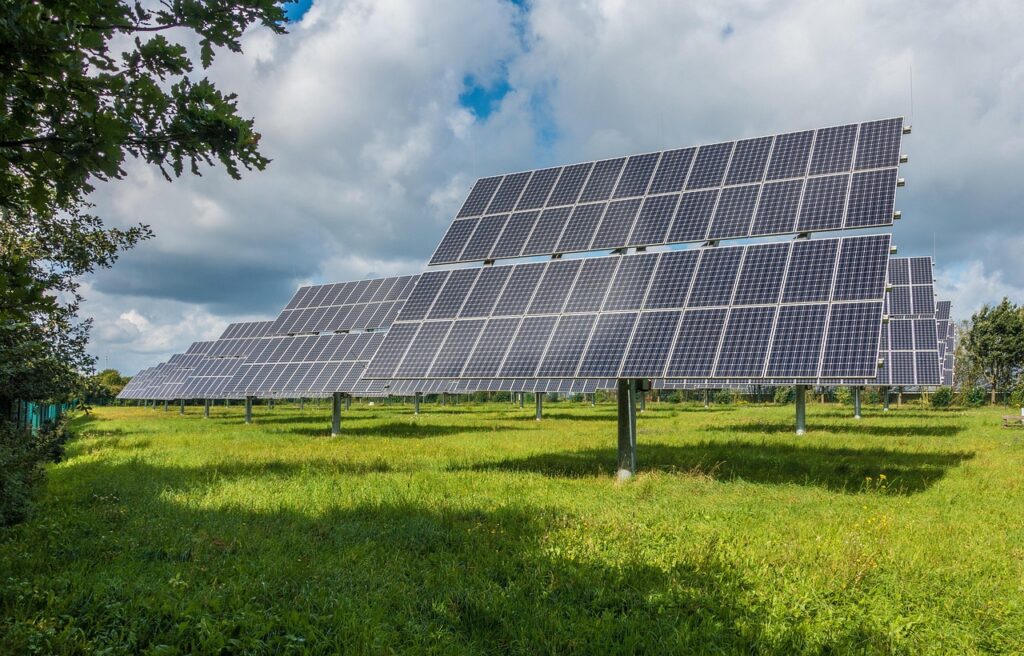
A common point of confusion is the difference between the two main types of solar panels. For pool heating, we use Solar Thermal Collectors.
| Technology Type | Function | Output | Primary Use |
| Solar Thermal1 | Absorbs the sun’s heat directly and transfers it to a fluid (your pool water).2 | Heat Energy (BTUs/Joules) | Pool Heating & Domestic Hot Water |
| Solar PV (Photovoltaic) | Absorbs sunlight and converts it into electricity. | Electrical Energy ($\text{kW}$) | Powering Homes, appliances, or running a pool heat pump. |
When searching for the best solar heater for pool use, you are specifically looking for a solar thermal system. These systems offer a zero-running cost solution that can reliably raise your pool temperature by $5–8^{\circ}\text{C}$ above ambient temperatures, significantly extending your swim season [Internal Link Opportunity: Read our detailed guide on Solar PV vs. Solar Thermal for Pools].
1.2 The Eco-Friendly and Financial Advantage
The primary appeal of solar pool heating is the elimination of ongoing energy costs.3 While an electric heat pump or gas boiler provides guaranteed heat, their running costs are tied directly to fluctuating UK energy tariffs, which have seen unprecedented volatility.
- Financial Savings: A well-sized solar power pool heating system replaces up to $100\%$ of the heat required during peak summer months, saving the average UK pool owner $\textsterling1,500$ to $\textsterling3,000$ per season in utility costs compared to electric resistance heating.
- Low Maintenance: These systems use simple plumbing, a pump, and collectors.4 There are no refrigerants, fans, or complex electronics, leading to a long lifespan and minimal maintenance demands.
- UK Feasibility: Contrary to common belief, solar thermal technology is highly effective in the UK. The collectors absorb UV irradiance, meaning they continue to generate heat even when skies are overcast [Internal Link Opportunity: UK Solar Performance: Debunking the Myths].
1.3 How the Solar Pool Warmer System Works
The fundamental process for a solar powered pool heater is simple, elegant, and reliable:
- Diverting Water: Your pool pump pushes filtered water through a manual or automatic 3-way bypass valve.
- Heat Collection: The valve directs the water to the pool solar panels (collectors). The water travels slowly through the narrow black tubes within the collectors, absorbing the heat generated by the sun.5
- Return: The warmed water is then routed back into the pool.
- Flow Control: The flow rate is crucial. A well-designed system includes a differential thermostat that only runs the water through the panels when the collectors are warmer than the pool water, ensuring you never cool your pool down. The bypass valve also allows you to throttle the flow manually to achieve maximum heat transfer.
1.4 Quick Facts: Solar Pool Heater UK Performance
| Fact | Performance Metric | Expert Notes |
| Running Cost | £0.00 | The heat energy is free. You only pay for the minor electricity to run your existing filter pump. |
| Temperature Boost | $5–8^{\circ}\text{C}$ | Expected temperature rise above the unheated ambient water temperature in the UK. |
| Season Extension | May through September | Provides comfortable swimming temperatures for up to 5 months annually. |
| Primary Technology | Solar Thermal | Systems are sized by surface area ($\text{m}^2$), not electrical power ($\text{kW}$). |
| Maximum Savings | 100% | The percentage of heat cost saved during sunny periods compared to fossil fuels/electricity. |
2. How to Correctly Size Your Solar Pool Heater ($\text{m}^2$) {https://www.google.com/search?q=%23section2}
Correct sizing is the single most important factor for achieving your desired water temperature. The core technical metric is the pool surface area, as heat loss occurs primarily through the water’s surface, especially through evaporation.
2.1 The Authoritative Sizing Formula
To correctly calculate the minimum size of solar panels for heating pool water, you must compare the collector area to the pool surface area.
$$\text{Collector Area required} (\text{m}^2) = \text{Pool Surface Area} (\text{m}^2) \times \text{Coverage Factor}$$
- Standard Coverage Factor: The industry standard for reliable UK heating is 0.75 (75%).
- Example: If your pool surface area is $24 \text{m}^2$, you need $24 \times 0.75 = 18 \text{m}^2$ of collector area.
2.2 Sizing Adjustments: The Two Key Variables
The coverage factor must be adjusted based on two crucial variables:
A. Collector Type (Efficiency)
- Rigid Thermal Panels (High Efficiency): Due to their superior heat retention (often glazed or vacuum sealed), you can comfortably use the 75% factor.
- Solar Mats/Domes (Low Efficiency): These unglazed systems lose heat more readily back to the air. You must increase your collector area to 100–120% of the pool’s surface area to achieve the same heating effect.
B. Pool Cover Usage
This factor cannot be overstated. A pool cover is the most effective way to retain heat.
- With Cover: If you consistently use a high-quality solar cover (which blocks up to $70\%$ of evaporation loss), you can confidently use the 75% factor.
- Without Cover: If you do not use a cover, your heat loss will be massive, and you may need to increase your collector size to 100–125% to keep up with the evaporation and convective heat loss.
2.3 Pool Size vs. Collector Area Required Table
This table details the minimum requirements for solar heating a swimming pool based on common UK residential pool sizes and assuming the use of highly efficient rigid collectors and a pool cover.
| Pool Size (Approx.) | Pool Surface Area (m2) | Min. Collector Area (m2) (75%) | Example Panel Count (1.5 m2 panel) | Internal Link |
| Small (12ft Round) | $10 \text{m}^2$ | $7.5 \text{m}^2$ | 5 | [See Solar Domes] |
| Medium (15ft Round) | $16 \text{m}^2$ | $12 \text{m}^2$ | 8 | [See Mat Kits] |
| Large ($20 \times 10 \text{ft}$ Rectangular) | $18.5 \text{m}^2$ | $14 \text{m}^2$ | 9 | [See Rigid Panels] |
| Very Large ($10 \text{m} \times 5 \text{m}$) | $50 \text{m}^2$ | $37.5 \text{m}^2$ | 25 | [See Commercial Kits] |
3. Full Cost Breakdown & ROI (Return on Investment) {#section3}
When considering a solar pool heater, the high return on investment (ROI) is its most compelling feature. While the initial cost can seem significant, the system generates free heat for up to two decades, quickly offsetting the purchase price. Here, we break down the current 2026 UK market costs for the two main types of solar pool heating systems.
3.1 Cost Comparison: Solar Mats vs. Rigid Panels
Your final investment depends heavily on the chosen collector type (as discussed in Section 2) and whether you opt for a DIY kit or a professional installation.
| Feature | DIY Solar Mat/Dome System | Professionally Installed Rigid Thermal Panel System |
| System Description | Unglazed, flexible rubber or HDPE/PVC mats. Low pressure, often ground- or shed-mounted. | Glazed or vacuum-tube collectors (superior efficiency). Roof-mounted, permanent fixture. |
| Average Upfront Cost (Supply Only) | £400 – £900 (For a medium-sized pool kit) | £2,200 – £4,500 (Collectors, pipework, and controls) |
| Average Installed Cost (Medium Pool) | £400 – £1,200 (Primarily DIY or simple plumbing) | £4,500 – £7,500 (Includes scaffolding, roof work, certified plumbing) |
| Lifespan | 3–7 Years | 15–20+ Years |
| Running Cost | £0.00 (Only existing pump cost) | £0.00 (Only existing pump cost) |
| Efficiency | Good in direct sun; poor in wind/cloud | Excellent in all seasons, highly resistant to heat loss |
| Target User | Above-ground pool owners, budget-conscious users, seasonal use. | In-ground pool owners, those seeking maximum efficiency and lifespan. |
3.2 Understanding Total Installation Costs (2026 UK Data)
For professional installation of high-efficiency solar panels for heating pool water, the cost per square metre typically ranges from £500 to £1,000, depending on complexity.
| Pool Surface Area (m2) | System Type | Average Total Installed Price Range | Internal Link Opportunity |
| Small (Up to $10 \text{m}^2$) | Glazed/Unglazed | £1,800 – £3,500 | [See Small Pool Heat Pumps] |
| Medium ($10 \text{m}^2 – 30 \text{m}^2$) | Glazed/Evacuated Tube | £4,500 – £7,500 | [See Hybrid Pool Systems] |
| Large ($30 \text{m}^2$+) | Glazed/Evacuated Tube | £8,000 – £12,000+ | [See Commercial Pool Heating] |
Note on VAT: Residential solar thermal installations in the UK currently benefit from a 0% VAT rate. Always confirm this incentive with your installer, as it significantly reduces the final cost.
3.3 Return on Investment (ROI) and Payback Period
The ROI calculation is straightforward: compare the annual cost of an alternative heating method (like an electric heat pump or gas boiler) to the upfront cost of your solar power pool heating system.
Annual Savings Comparison
| Heating Method | Annual Running Cost (Est. Medium Pool, 5-month season) |
| Electric Heater (Resistance) | £1,500 – £3,000 |
| Gas Boiler | £1,200 – £2,500 |
| Air Source Heat Pump (High CoP) | £500 – £1,000 |
| Solar Pool Heater | £0 (Excl. Pump Electricity) |
Calculating Your Solar Payback Period
- Payback Period: Due to the substantial annual savings, a professionally installed rigid solar pool heater typically reaches its break-even point in 7 to 10 years. For a DIY mat system, this can be as fast as 1 to 3 seasons if replacing high-cost electric heating. After the payback period, the heat generated is pure profit.
3.4 Hybrid Systems: The Ultimate Efficiency
Many UK pool owners choose a hybrid heating solution that combines the free heat of a solar powered pool heater with the guaranteed output of a modern air source heat pump.
- Solar’s Role: Provides the base load heating, raising the temperature to, say, $24^{\circ}\text{C}$ for free.
- Heat Pump’s Role: Only runs to “top up” the remaining $2–4^{\circ}\text{C}$ required to hit the target $28^{\circ}\text{C}$. This drastically reduces the heat pump’s run time, extending its lifespan and minimizing its electricity consumption, providing the best of both worlds.
4. Maximizing Performance: Location, Tilt, and Flow {#section4}
A solar pool heater is a passive technology, meaning its performance is entirely dependent on its environment. Even a perfectly sized system can underperform if the collectors are positioned incorrectly, or if the water is flowing too quickly. Achieving maximum output requires careful attention to three key factors: Orientation, Tilt Angle, and Flow Rate.
4.1 Orientation: Which Direction is Best?
For optimal solar pool heating in the Northern Hemisphere (and specifically the UK), your collectors must face the direction that receives the most hours of direct sunlight.
- Optimal Direction: True South. Panels facing due South receive the most consistent energy throughout the day, providing $100\%$ of the potential output.
- Acceptable Directions: Panels facing South-East or South-West are generally acceptable and will still produce around 90–95% of the energy output compared to due South.
- Sub-Optimal Directions: Panels facing due East or West can suffer a noticeable reduction, typically 15–25% less energy over the swimming season. You may need to increase your collector surface area to compensate for this reduced exposure. North-facing installations are not recommended unless absolutely unavoidable.
4.2 Tilt Angle: Finding the Sweet Spot for Summer
Unlike solar PV panels, which are often optimised for year-round output, a solar pool warmer is optimised for the summer swimming season (May to September) when the sun is high.
- Optimal UK Summer Tilt: For maximum heat capture during the key swimming months, the ideal angle from the horizontal should be around $20^{\circ}$ to $30^{\circ}$.
- General Year-Round Tilt: Many fixed roof installations adopt an angle between $35^{\circ}$ and $40^{\circ}$ (close to the UK’s latitude). While this is a good average, it is slightly steeper than the summer optimum.
- The Flat Roof Challenge: If installing solar panels for heating pool water on a flat roof (common for garages or extensions), adjustable mounting frames are mandatory. These frames are engineered to achieve the optimal tilt angle, preventing the panels from lying flat, which reduces efficiency and increases dirt accumulation.
| UK Region (Approx. Latitude) | Optimal Tilt Angle (Summer Season) | Typical Fixed Roof Pitch |
| South East/London | $\sim 21^{\circ}$ | $30^{\circ} – 36^{\circ}$ |
| North West/Scotland | $\sim 23^{\circ}$ | $35^{\circ} – 40^{\circ}$ |
4.3 Flow Rate Control: The Bypass Valve is Essential
The heat transfer process depends on the water spending enough time inside the collectors. Controlling the flow rate is perhaps the most important operational factor after orientation.
- The Bypass Valve: Every single solar heater for pool installation must include a 3-way bypass valve kit. This valve, usually comprised of three ball valves arranged in a ‘T’ configuration, allows you to divert the pool water either through the collectors or around them. [Affiliate Link Opportunity: Recommended 3-way Bypass Valve Kit]
- The “Slow and Warm” Rule: You want the water flowing slowly enough through the collectors so that when it returns to the pool, it is noticeably $1–2^{\circ}\text{C}$ warmer than when it left.
- Too Fast Flow: The water spends insufficient time in the collector, and the temperature gain is negligible.
- Too Slow Flow: The water may become too hot (steam), causing pressure problems, or strain the pump motor.
- Balancing the Flow: Use the valve on the bypass leg to throttle the water flowing around the collectors. By closing the bypass valve slightly, you force more water up to the roof, slowing the circulation and increasing the heat gain per pass.
4.4 Planning Permission and Permitted Development (UK Law)
A major advantage of installing solar power pool heating is that in most cases, you do not need planning permission in the UK, as the work falls under “Permitted Development” rights.
- General Rule: Planning permission is not required for solar thermal equipment installed on a house or block of flats, provided certain conditions are met:
- The equipment must not protrude more than 200mm (20cm) from the roof slope or wall surface.
- The highest part of the equipment must not exceed the highest part of the roof (excluding the chimney).
- Exceptions (When you DO need permission):
- Listed Buildings: Always require Listed Building Consent.
- Conservation Areas / World Heritage Sites: Panels must not be fitted to a wall or roof slope that fronts a public highway.
- Ground-Mounted: Ground-mounted solar panels for heating pool water are limited to 9 square metres and must be at least 5 metres from any boundary.
If you are unsure, always consult your installer or your Local Planning Authority (LPA) before committing to installation.
5. Installation, Maintenance, and Lifespan {#section5}
While the operation of a solar power pool heating system is nearly passive, the initial installation and ongoing maintenance are crucial to ensuring the 15-to-20-year lifespan that these systems are designed for. Whether you choose a DIY approach for solar mats or hire professionals for rigid panels, preparation is key.
5.1 Installation: DIY vs. Professional
The complexity and duration of the installation vary significantly depending on the collector type and placement.
A. DIY Solar Mat Installation
- System Type: Best suited for above-ground pools or ground/shed mounting, as the mats are lightweight and flexible.
- Timeframe: Typically takes 2 to 4 hours.
- Process: Requires cutting the existing return pipe and installing the 3-way bypass valve (mentioned in Section 4). The mats are connected in a series or parallel circuit and run back to the valve. [Internal Link Opportunity: Step-by-Step Guide to Installing Solar Mats]
- Skill Level: Low-to-moderate. Basic plumbing knowledge and confidence working with PVC pipe are helpful.
B. Rigid Thermal Panel Installation
- System Type: Best suited for in-ground pools and roof mounting (house, garage, or pool house).
- Timeframe: Usually takes 1 to 3 days and requires multiple workers.
- Process: Requires specialized roof mounting hardware and structural consideration. The plumbing must be run from the pump to the roof, often requiring long runs of dedicated pipework.
- Skill Level: Professional required. This ensures correct roof integrity, alignment, sealing, and warranty compliance.
5.2 The Importance of a Differential Thermostat
For large, professionally installed solar pool heating systems, a simple manual bypass valve is often replaced by an automated differential thermostat.
- Function: This smart device uses two temperature sensors: one placed in the pool water and one placed on the collectors (the hottest point).
- Automation: It automatically opens the 3-way valve to run water through the collectors only when the collector temperature is $3–5^{\circ}\text{C}$ higher than the pool water temperature. This prevents the system from running the pump unnecessarily or, worse, cooling the pool down when the collectors are cold (like on a breezy afternoon or after sunset).
5.3 Maintenance and Lifespan (The UK Winter Challenge)
Maintenance is minimal, but critical, especially when addressing the UK’s cold climate.
| Maintenance Task | Solar Mat System | Rigid Thermal Panel System |
| Annual Winterization | Mandatory. Must be fully drained and stored indoors to prevent cracking and freeze damage. | Mandatory. Must be fully drained using compressed air or vacuum to prevent water freezing in the copper tubes/pipes. |
| Regular Cleaning | Low importance, but rinse off debris. | Highly important. Dust and pollen accumulation can significantly reduce solar absorption. |
| Component Check | Inspect rubber for cracks/leaks (common after 3 years). | Check pipe insulation, glazing seals, and roof mounting hardware (annual visual check). |
| Expected Lifespan | 3–7 Years (Due to UV degradation) | 15–25 Years (Highly durable components) |
E-E-A-T Focus: The long-term reliability of a rigid panel system is a core reason professionals recommend them for permanent heating a swimming pool with solar. Their components (copper, tempered glass) are engineered to withstand the UK’s freeze-thaw cycles far better than flexible mats, provided they are correctly winterized.
5.4 Using Solar as a Pre-Heater for Heat Pumps
If you are using a hybrid system (solar + heat pump), the solar acts as a dedicated pre-heater. This is the ultimate energy-efficient strategy.
- The Principle: The solar pool warmer raises the water temperature from the frigid winter low (say, $10^{\circ}\text{C}$) to a comfortable base temperature (say, $22^{\circ}\text{C}$) for free.
- The Benefit: The heat pump then only needs to run to achieve the final $6^{\circ}\text{C}$ boost to hit your $28^{\circ}\text{C}$ target. This reduces the heat pump’s run time by $50–70\%$, vastly lowering your running costs and extending the heat pump’s compressor life.
6. Frequently Asked Questions (FAQ) {#section6}
This final section addresses common queries directly, further boosting your article’s authority and capturing long-tail search traffic related to solar panel swimming pool heaters.
You can realistically expect a temperature increase of 5 to 8 degrees celcius above the average unheated water temperature in the UK. This boost is usually enough to maintain a comfortable swimming temperature of 26 to 29 degrees celcius during the peak summer months (June to August), provided you use a pool cover and the system is correctly sized (75% of your pool surface area). Expect lower gains in May and September.
Yes, a hybrid system is the ultimate solution for guaranteed comfort and maximum cost savings. The solar pool heater provides the majority of the heat for free (the base load), and the heat pump only runs to provide the final few degrees of boost, offering precise temperature control on cloudy or cooler days. This combination drastically reduces the heat pump’s electricity consumption, saving you money while ensuring your pool is always ready. [Internal Link Opportunity: Hybrid Pool Heating: Is it Worth the Investment?]
Generally, no. Most roof-mounted solar panels for heating pool water fall under “Permitted Development” rights in the UK. This applies as long as the panels do not protrude more than 200mm from the roof plane and are not on a Listed Building or facing a public highway in a Conservation Area. Always verify the specifics with your Local Planning Authority (LPA).
The payback period depends entirely on your current heating method and the system type you choose:
DIY Solar Mats: Can pay for themselves in as little as 1 to 3 seasons if replacing an expensive electric heater.
Professionally Installed Rigid Thermal Panels: Typically pay for themselves in 7 to 10 years. After the payback period, the heat generated by the solar powered pool heater is pure profit.
Yes, a well-designed solar pool heater will still work on cloudy days. The collectors absorb UV irradiance, which penetrates cloud cover, continuing to generate heat. However, output will be reduced compared to full sun. Windy days are a bigger problem, as they increase heat loss from the collectors, particularly with lower-efficiency unglazed solar mats. This is why rigid, glazed collectors are preferred in the UK’s windy climate.
Maintenance is very low. The primary annual requirement is winterisation—the system must be completely drained and dried out before the first deep frost (usually late October/early November in the UK) to prevent water freezing and cracking the pipes or collectors. Rigid panels also benefit from an annual visual inspection to check seals and mounting integrity.
The minimum recommended collector surface area for consistent solar heating a swimming pool in the UK is 75% of your pool’s surface area. For instance, a $40 \text{m}^2$ pool requires at least $30 \text{m}^2$ of high-efficiency collectors. This coverage factor ensures the collectors can overcome the pool’s natural heat loss.
For a permanent, in-ground pool in the UK, the best choice is a high-efficiency rigid thermal panel system (either flat plate or evacuated tubes). While the initial cost is higher than solar mats, the superior lifespan (15–25 years), durability, and efficiency in colder and windier conditions make them the far superior long-term investment for consistent performance.
Get Free Solar Pool Heater Quotes Fill in the quick form today to receive bespoke, no-obligation quotes from trusted UK suppliers in your area. [Affiliate Link Opportunity: Main Installer Network Link] Compare Quotes Now